Afternoon-Exclusive Deluxe Checkup - Plan A Ladies
Prefer to book it yourself? Call Taichung Veterans General Hospital on 04-23741288 or use its website ↗. It's free; most hospitals take bookings in Chinese.
We book it with the hospital for you, from US$149, paid only after the hospital confirms. We reply by email with available dates, the confirmed price, and whether an English report is available.
Paying from a US account? HSA and FSA notes.
A standard-tier program with Abdominal ultrasound, Breast ultrasound and Resting ECG and a 36-test panel, with a doctor's review at the end.
What stands out
Liver (fatty liver, tumors), gallbladder stones, pancreas, spleen and kidneys.
Breast lumps; complements mammography, especially in dense breasts.
Heart rhythm and signs of prior heart damage.
Every test, in English
36 tests listed, 31 of them on our shared test list, so they line up against other hospitals' packages.
Show all 36 tests and what each screens for
| Test | Screens for |
|---|---|
| Vitals | |
| Blood pressure | Screens for hypertension, a major risk factor for heart disease and stroke. |
| Body composition analysis | Body fat, muscle mass and water percentage. |
| Height, weight and BMI | Basic body measurements used to assess weight-related health risk. |
| Basic vital signs (pulse, temperature, respiration) | Basic pulse, temperature and breathing rate measurements taken during a checkup. |
| Waist circumference | Central obesity, a marker of metabolic risk. |
| Blood Count | |
| Complete blood count | Anemia, infection and blood cell disorders. |
| White blood cell differential | Breakdown of white cell types; infection, allergy and some blood cancers. |
| Liver Function | |
| ALT (SGPT) | Liver cell damage; the most common liver screening test. |
| AST (SGOT) | Liver cell damage. |
| Kidney & Electrolytes | |
| Creatinine | Kidney function. |
| Estimated GFR | Kidney filtering capacity; stages chronic kidney disease. |
| Uric acid | Gout risk and kidney stone risk. |
| Lipids & Cardiometabolic | |
| HDL cholesterol | Protective cholesterol level. |
| LDL cholesterol | The main cholesterol driving heart disease risk. |
| Triglycerides | Cardiovascular and pancreatitis risk. |
| Glucose | |
| Fasting glucose | Diabetes and prediabetes. |
| Hemoglobin A1c | Average blood sugar over the past three months; diabetes. |
| Thyroid & Endocrine | |
| Free T4 | Thyroid hormone level. |
| TSH | Thyroid function; the primary thyroid screening test. |
| Tumor Markers | |
| CA-125 | Ovarian cancer marker. |
| CA 15-3 | Breast cancer marker. |
| Urine & Stool | |
| Stool occult blood (FIT) | Colorectal cancer and polyps; the standard non-invasive colon screen. |
| Urinalysis | Kidney disease, urinary infection, diabetes. |
| Cardiac | |
| Resting ECG | Heart rhythm and signs of prior heart damage. |
| X-ray | |
| Chest X-ray | Lung, heart size and chest abnormalities. |
| Ultrasound | |
| Abdominal ultrasound | Liver (fatty liver, tumors), gallbladder stones, pancreas, spleen and kidneys. |
| Breast ultrasound | Breast lumps; complements mammography, especially in dense breasts. |
| Eye | |
| Color vision | Color vision deficiency. |
| Intraocular pressure | Glaucoma. |
| Visual acuity | Vision sharpness. |
| Consultation | |
| Physician physical examination | A doctor's hands-on examination and history taking. |
Before you book
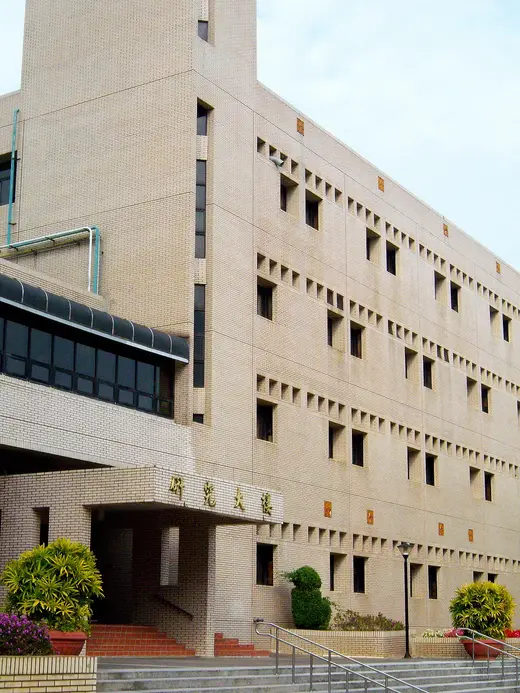
5.2 km from Taichung City Hall station
On the OCAC i僑卡 partner list. Card holders can ask the center about a discount.
8 packages listed
About this hospitalWhat the center says
From the center's own pages, in English. Each statement links to its source.
The center says every examinee, whether a Taiwanese or a foreign national and whether or not they have NHI status, pays for the health checkup themselves at the same NTD price.
The center says these packages include a video explanation of the report by the physician plus health education.
Bought one by one at US cash-pay marketplaces, the 31 of 31 tests we could price list at about US$1,611–2,157 (MDsave, Quest and others; checked 2026-10-11).
How we priced it
A panel counts once however many of its tests the package lists. A test for one sex only is counted only for that sex. Tests we could not price are left out, so this is not what a US checkup would cost. Prices marked "rough" come from a single reseller or are extrapolated from a similar test.
- Abdominal ultrasound: US$150–375, MDsave, ultrasound one body area
- Body composition analysis: US$40–55, BodySpec ($40-55 per DEXA); BodySpec guide ($40-200 wellness providers; InBody $15-30)
- Breast ultrasound (women only): US$331, MDsave Ultrasound Breast Bilateral
- CA-125 (women only): US$34, shayahealth.com (reseller), rough
- CA 15-3 (women only): US$59, Walk-In Lab (reseller), rough
- Complete blood count and 1 related test, priced as one panel: US$29, Quest direct
- Chest X-ray: US$100–150, careroute.ai; khealth.com
- Creatinine and 4 related tests, priced as one panel: US$49, Quest direct comprehensive metabolic panel
- Free T4: US$89, Labcorp OnDemand TSH + free T4 panel $89 list (checked 2026-10-11); Walk-In Lab free T3 + free T4 panel $69 (reseller, not re-checked)
- Hemoglobin A1c: US$39, Quest direct
- Physician physical examination and 4 related tests, priced as one panel: US$250–400, CVS ($99-150); CoveredUSA median ~$250; Sidecar ($353-502)
- Resting ECG: US$102, CarePriceGuide national average
- Stool occult blood (FIT): US$49–89, Everlywell FIT $49; Quest FIT home kit $79; Labcorp ColoFIT $89 list; Walk-In Lab $95 reseller
- Total cholesterol and 3 related tests, priced as one panel: US$59, Quest direct lipid panel
- TSH: US$49, Quest direct
- Uric acid: US$42–49, Quest $42 (gout uric acid test); Labcorp OnDemand $49; Walk-In Lab $29 reseller
- Urinalysis: US$40–49, Quest $40; Labcorp OnDemand $49; Walk-In Lab $29 reseller
- General eye exam and 3 related tests, priced as one panel: US$100–150, Warby Parker ($85); America's Best ($80); CoveredUSA median ~$150; VisionTestCost 1280-store median $95
Radiation from this package's imaging
About 0.1 mSv from the tests we could identify, a typical adult dose for these exams: less than 1 month of natural background radiation (about 3 mSv a year, US average).
This package also lists 5 items we have not matched to a test; if any of them is an X-ray, CT or PET scan, the total is higher.
- Chest X-ray · about 0.1 mSv
Typical doses from published references (RadiologyInfo.org ↗, Mettler et al. 2008 ↗); the actual dose depends on the scanner and protocol. Ask the center for its own figure.
What US screening guidelines say
The US Preventive Services Task Force is an independent US panel whose recommendations cover people without symptoms. Shown for comparison; it is not advice for you.
What US screening guidelines say about 14 of these tests
General preparation notes for 7 tests in this package
This is general information about how the exam is usually done, not medical advice for you or your family member. Requirements vary by center and by individual health history — always follow the center's own instructions and your own doctor's guidance, especially for any medicine change.
Mention when booking: Mention a pacemaker or implanted defibrillator: the test passes a weak electric current through the body and has traditionally not been recommended with these devices.
Fasting for 9 to 12 hours (no food or drink except plain water) is often requested.
Mention when booking: Confirm with the center whether your test needs fasting; if you take insulin or other diabetes medicine, ask the prescribing doctor how to manage it while fasting.
Usually needs at least 8 hours without food or drink except water beforehand.
Mention when booking: If you take insulin or other diabetes medicine, ask the prescribing doctor how to manage it while fasting, and mention it to the center.
Guaiac-based kits usually ask you to avoid red meat, NSAIDs and more than 250mg of vitamin C for a few days beforehand; FIT kits usually need no diet change.
Mention when booking: Tell the center which kit you were given, and ask the prescribing doctor before stopping aspirin taken for the heart.
Usually needs a clean-catch (midstream) sample; some tests instead ask you to collect all urine passed over 24 hours.
Mention when booking: Ask which specific urine test your provider ordered, since collection instructions vary by test.
Usually needs no fasting; you remove jewelry, metal objects and sometimes clothing above the waist for a hospital gown.
Mention when booking: Tell the center if you are, or might be, pregnant.
Usually needs about 6 hours without food beforehand; clear fluids other than milk or fizzy drinks are commonly still allowed. Loose, comfortable clothing is easiest.
Mention when booking: Mention if you have type 1 diabetes, so the center can offer an early appointment time.
How we collect and check these prices: see who we are and where the data comes from.
If this isn't quite right
Other packages at Taichung Veterans General Hospital
| Package | Tests | Price |
|---|---|---|
| Afternoon-Exclusive Deluxe Checkup - Plan D Standard | 31 | US$187 NT$6,000 |
| Blood Test - Core Package | 38 | US$218 NT$7,000 |
| Afternoon-Exclusive Deluxe Checkup - Plan B Gentlemen | 37 | US$249 NT$8,000 |
| Afternoon-Exclusive Deluxe Checkup - Plan C Bone Health | 35 | US$249 NT$8,000 |
| Blood Test - Prestige Package | 58 | US$523 NT$16,800 |
| Afternoon Plan: Sustained Health Protection - Plan B Cerebrovascular | 22 | US$997 NT$32,000 |
| Afternoon Plan: Sustained Health Protection - Plan A Cardiovascular | 22 | US$1,293 NT$41,500 |
All packages at Taichung Veterans General Hospital Health Management Center →
Similar packages in Taichung
| Package | Hospital | Tests | Price |
|---|---|---|---|
| Heart Assurance Checkup (Youhuo Heartbeat Plan E1) | Taichung Hospital, Ministry of Health and Welfare | 55 | US$246 NT$7,900 |
| Splendid Checkup Package | Lin Shin Hospital Health Management Center | 60 | US$234 NT$7,500 |
| Cancer Prevention Checkup (Leohuo Refined Plan D1) | Taichung Hospital, Ministry of Health and Welfare | 58 | US$215 NT$6,900 |
| Cherished Woman Checkup (Plan B) | Taichung Hospital, Ministry of Health and Welfare | 69 | US$308 NT$9,900 |
| Gentleman Vitality Checkup (Plan C) | Taichung Hospital, Ministry of Health and Welfare | 70 | US$308 NT$9,900 |
| Good Health Checkup | Cheng Ching Hospital Chung Kang Branch Health Management Center | 79 | US$187 NT$6,000 |
US$ at 32.1 TWD, 23 Sep 2026; you pay in NT$.
Browse: Cancer screening · Women's health · All checkups in Taichung · What a checkup costs in Taiwan