Health 99 - National Civil Servant & Teacher Checkup Plan

US$109
NT$3,500 · you pay the hospital in NT$
Book this checkup

Prefer to book it yourself? Call Taichung Hospital (MOHW) on 04-22294411 or use its website ↗. It's free; most hospitals take bookings in Chinese.

We book it with the hospital for you, from US$149, paid only after the hospital confirms. We reply by email with available dates, the confirmed price, and whether an English report is available.

Paying from a US account? HSA and FSA notes.

Share on LINE / 分享到 LINE

As published by the hospital · checked 2026-09-20

A standard-tier program with Abdominal ultrasound, Breast ultrasound, Pelvic (gynecologic) ultrasound, Prostate ultrasound and Thyroid ultrasound and a 70-test panel, with a doctor's review at the end.

Lead time
7 days
Offer ends
2028-12-31
English report
Ask the hospital (we ask for you in Book it for me)

What stands out

Abdominal ultrasound

Liver (fatty liver, tumors), gallbladder stones, pancreas, spleen and kidneys.

Breast ultrasound

Breast lumps; complements mammography, especially in dense breasts.

Pelvic (gynecologic) ultrasound

Uterus and ovary abnormalities (fibroids, cysts).

Prostate ultrasound

Prostate size and abnormalities.

Every test, in English

70 tests listed, 52 of them on our shared test list, so they line up against other hospitals' packages.

Vitals4
Blood Count2
Liver Function10
Kidney & Electrolytes4
Lipids & Cardiometabolic4
Glucose3
Thyroid & Endocrine1
Tumor Markers6
Urine & Stool2
Cardiac4
X-ray1
Ultrasound5
Bone & Body Composition1
Eye3
Neuro & Cognitive1
Consultation1
Show all 70 tests and what each screens for
TestScreens forAdd-on?
Vitals
Blood pressureScreens for hypertension, a major risk factor for heart disease and stroke.Incl.
Height, weight and BMIBasic body measurements used to assess weight-related health risk.Incl.
Basic vital signs (pulse, temperature, respiration)Basic pulse, temperature and breathing rate measurements taken during a checkup.Incl.
Waist circumferenceCentral obesity, a marker of metabolic risk.Incl.
Blood Count
Complete blood countAnemia, infection and blood cell disorders.Incl.
White blood cell differentialBreakdown of white cell types; infection, allergy and some blood cancers.Incl.
Liver Function
AlbuminLiver function and nutrition status.Incl.
Alkaline phosphataseLiver, bile duct and bone conditions.Incl.
ALT (SGPT)Liver cell damage; the most common liver screening test.Incl.
AST (SGOT)Liver cell damage.Incl.
Direct bilirubinBile duct obstruction.Incl.
Gamma-GTBile duct and alcohol-related liver stress.Incl.
Globulin and A/G ratioImmune protein levels.Incl.
Lactate dehydrogenaseNon-specific tissue damage marker.Add-on
Total bilirubinJaundice, liver and bile problems.Incl.
Total proteinNutrition and liver/kidney protein handling.Incl.
Kidney & Electrolytes
Blood urea nitrogenKidney function.Incl.
CreatinineKidney function.Incl.
Estimated GFRKidney filtering capacity; stages chronic kidney disease.Incl.
Uric acidGout risk and kidney stone risk.Incl.
Lipids & Cardiometabolic
HDL cholesterolProtective cholesterol level.Incl.
LDL cholesterolThe main cholesterol driving heart disease risk.Incl.
Total cholesterolCardiovascular risk.Incl.
TriglyceridesCardiovascular and pancreatitis risk.Incl.
Glucose
Fasting glucoseDiabetes and prediabetes.Incl.
Hemoglobin A1cAverage blood sugar over the past three months; diabetes.Add-on
Fasting insulinInsulin resistance.Incl.
Thyroid & Endocrine
TSHThyroid function; the primary thyroid screening test.Add-on
Tumor Markers
AFPLiver cancer marker (also used with liver ultrasound in hepatitis B carriers).Incl.
CA-125Ovarian cancer marker.Add-on
CA 15-3Breast cancer marker.Add-on
CEAColorectal and other GI cancer marker.Incl.
CYFRA 21-1Lung cancer marker.Add-on
PSAProstate cancer marker.Add-on
Urine & Stool
Stool occult blood (FIT)Colorectal cancer and polyps; the standard non-invasive colon screen.Incl.
UrinalysisKidney disease, urinary infection, diabetes.Incl.
Cardiac
Arterial stiffness (ABI / PWV)Peripheral artery disease and arterial stiffness.Add-on
Creatine kinaseMuscle and heart muscle damage.Add-on
10-year cardiovascular risk scoreA calculated estimate of your 10-year risk of heart attack or stroke based on your risk factors.Incl.
Resting ECGHeart rhythm and signs of prior heart damage.Incl.
X-ray
Chest X-rayLung, heart size and chest abnormalities.Incl.
Ultrasound
Abdominal ultrasoundLiver (fatty liver, tumors), gallbladder stones, pancreas, spleen and kidneys.Incl.
Breast ultrasoundBreast lumps; complements mammography, especially in dense breasts.Add-on
Pelvic (gynecologic) ultrasoundUterus and ovary abnormalities (fibroids, cysts).Incl.
Prostate ultrasoundProstate size and abnormalities.Add-on
Thyroid ultrasoundThyroid nodules.Incl.
Bone & Body Composition
Bone density (DXA)Osteoporosis and fracture risk.Add-on
Eye
Color visionColor vision deficiency.Incl.
Intraocular pressureGlaucoma.Incl.
Visual acuityVision sharpness.Incl.
Neuro & Cognitive
Autonomic nervous system (HRV) testStress and autonomic balance.Add-on
Consultation
Physician physical examinationA doctor's hands-on examination and history taking.Incl.
Vitals
Blood pressureIncl.
Screens for hypertension, a major risk factor for heart disease and stroke.
Height, weight and BMIIncl.
Basic body measurements used to assess weight-related health risk.
Basic vital signs (pulse, temperature, respiration)Incl.
Basic pulse, temperature and breathing rate measurements taken during a checkup.
Waist circumferenceIncl.
Central obesity, a marker of metabolic risk.
Blood Count
Complete blood countIncl.
Anemia, infection and blood cell disorders.
White blood cell differentialIncl.
Breakdown of white cell types; infection, allergy and some blood cancers.
Liver Function
AlbuminIncl.
Liver function and nutrition status.
Alkaline phosphataseIncl.
Liver, bile duct and bone conditions.
ALT (SGPT)Incl.
Liver cell damage; the most common liver screening test.
AST (SGOT)Incl.
Liver cell damage.
Direct bilirubinIncl.
Bile duct obstruction.
Gamma-GTIncl.
Bile duct and alcohol-related liver stress.
Globulin and A/G ratioIncl.
Immune protein levels.
Lactate dehydrogenaseAdd-on
Non-specific tissue damage marker.
Total bilirubinIncl.
Jaundice, liver and bile problems.
Total proteinIncl.
Nutrition and liver/kidney protein handling.
Kidney & Electrolytes
Blood urea nitrogenIncl.
Kidney function.
CreatinineIncl.
Kidney function.
Estimated GFRIncl.
Kidney filtering capacity; stages chronic kidney disease.
Uric acidIncl.
Gout risk and kidney stone risk.
Lipids & Cardiometabolic
HDL cholesterolIncl.
Protective cholesterol level.
LDL cholesterolIncl.
The main cholesterol driving heart disease risk.
Total cholesterolIncl.
Cardiovascular risk.
TriglyceridesIncl.
Cardiovascular and pancreatitis risk.
Glucose
Fasting glucoseIncl.
Diabetes and prediabetes.
Hemoglobin A1cAdd-on
Average blood sugar over the past three months; diabetes.
Fasting insulinIncl.
Insulin resistance.
Thyroid & Endocrine
TSHAdd-on
Thyroid function; the primary thyroid screening test.
Tumor Markers
AFPIncl.
Liver cancer marker (also used with liver ultrasound in hepatitis B carriers).
CA-125Add-on
Ovarian cancer marker.
CA 15-3Add-on
Breast cancer marker.
CEAIncl.
Colorectal and other GI cancer marker.
CYFRA 21-1Add-on
Lung cancer marker.
PSAAdd-on
Prostate cancer marker.
Urine & Stool
Stool occult blood (FIT)Incl.
Colorectal cancer and polyps; the standard non-invasive colon screen.
UrinalysisIncl.
Kidney disease, urinary infection, diabetes.
Cardiac
Arterial stiffness (ABI / PWV)Add-on
Peripheral artery disease and arterial stiffness.
Creatine kinaseAdd-on
Muscle and heart muscle damage.
10-year cardiovascular risk scoreIncl.
A calculated estimate of your 10-year risk of heart attack or stroke based on your risk factors.
Resting ECGIncl.
Heart rhythm and signs of prior heart damage.
X-ray
Chest X-rayIncl.
Lung, heart size and chest abnormalities.
Ultrasound
Abdominal ultrasoundIncl.
Liver (fatty liver, tumors), gallbladder stones, pancreas, spleen and kidneys.
Breast ultrasoundAdd-on
Breast lumps; complements mammography, especially in dense breasts.
Pelvic (gynecologic) ultrasoundIncl.
Uterus and ovary abnormalities (fibroids, cysts).
Prostate ultrasoundAdd-on
Prostate size and abnormalities.
Thyroid ultrasoundIncl.
Thyroid nodules.
Bone & Body Composition
Bone density (DXA)Add-on
Osteoporosis and fracture risk.
Eye
Color visionIncl.
Color vision deficiency.
Intraocular pressureIncl.
Glaucoma.
Visual acuityIncl.
Vision sharpness.
Neuro & Cognitive
Autonomic nervous system (HRV) testAdd-on
Stress and autonomic balance.
Consultation
Physician physical examinationIncl.
A doctor's hands-on examination and history taking.
Also listed: Beta-hCG (testicular cancer/seminoma marker), male, Cardiovascular risk factor index, Chronic kidney disease (CKD) staging, Eosinophil count, Eosinophils (%), HIV antibody screening, MCH (mean corpuscular hemoglobin), MCHC (mean corpuscular hemoglobin concentration), Mean corpuscular volume (MCV), Mean platelet volume ratio, Plateletcrit (PCT), Precision pure tone audiometry (7 frequencies), Tuning fork hearing test, Urine appearance, Urine bacteria microscopy, Urine color, Urine crystals, Urobilinogen.

Before you book

Booking lead time7 days
Offer ends2028-12-31, as the hospital states
If something is foundAsk the hospital how any findings are explained, on the day or at a follow-up appointment; in Book it for me we ask for you and tell you before you book. Your own doctor decides what to do next; we do not arrange treatment.
Results and imagingAsk the hospital how long results take and how imaging is delivered; in Book it for me we ask for you and tell you before you book.
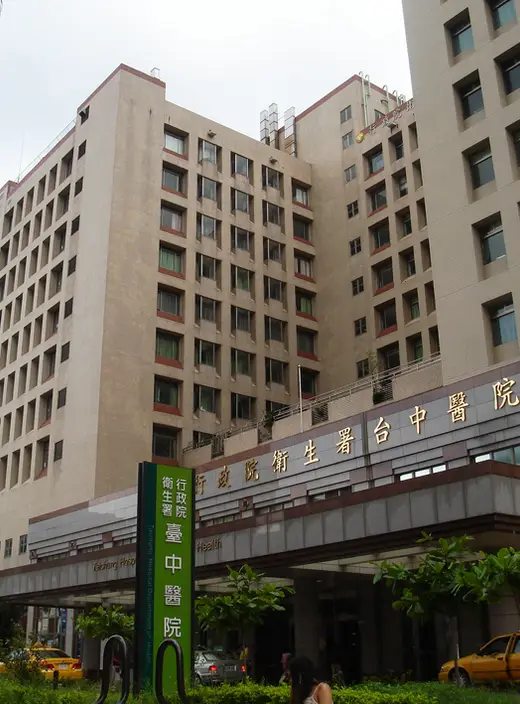
Taichung Hospital, Ministry of Health and Welfare building
Taichung Hospital, Ministry of Health and Welfare
Regional hospital
Taichung · West

1.2 km from Taichung station

On the OCAC i僑卡 partner list. Card holders can ask the center about a discount.

12 packages listed

About this hospital

What the center says

From the center's own pages, in English. Each statement links to its source.

Booking and payment
  • For the civil-servants-and-teachers checkup package, the center asks patients to book at least 5 days ahead and finish check-in by 10:00 on exam day.

    Source ↗ · checked 2026-09-20

  • For the civil-servants-and-teachers checkup package, check-in must be completed by 10:00 on exam day.

    Source ↗ · checked 2026-09-20

  • The center's civil-servants-and-teachers checkup flyer asks patients to book at least a week ahead; the NT$3,500 fee for choosing plan A, B or C is collected on the day.

    Source ↗ · checked 2026-09-20

  • If a patient gives up on or cannot complete a checkup item during the exam, the center does not allow swapping it for another item or refunding it.

    Source ↗ · checked 2026-09-20

Before and on the day
  • The center recommends drinking 1500 to 2000cc of water a day for the week before the colonoscopy.

    Source ↗ · checked 2026-09-20

  • The center advises against sedation for patients with a BMI over 32 or older than 80.

    Source ↗ · checked 2026-09-20

Results
  • For the civil-servants-and-teachers checkup package, the sealed report is ready in about 10 working days and the center can help mail it, or patients may collect it in person (mailing time not included).

    Source ↗ · checked 2026-09-20

  • For the civil-servants-and-teachers checkup package, the center provides a sealed report that can be mailed domestically about ten working days after completion (not counting the mailing day), or the patient can collect it in person at the hospital.

    Source ↗ · checked 2026-09-20

  • If a biopsy was taken during the endoscopy, the center helps book a follow-up visit about 7 working days later where a specialist explains the pathology results, and the patient must pay the outpatient registration fee and copay.

    Source ↗ · checked 2026-09-20

Add to this package

Tests this center prices separately that this package does not include.

TestPriceNote
Lipase
US$6
NT$188
Source ↗ · checked 2026-09-20
CA 19-9as listed: CA 19-9 tumor marker
US$16
NT$500
Source ↗ · checked 2026-09-20
H. pylori stool antigenas listed: H. pylori stool antigen test
US$15
NT$470
Source ↗ · checked 2026-09-20
Echocardiogramas listed: Echocardiogram (heart ultrasound)
US$74
NT$2,363
Source ↗ · checked 2026-09-20
Sleep apnea screeningas listed: Overnight polysomnography (sleep study)
US$177
NT$5,669
Source ↗ · checked 2026-09-20
Carotid ultrasoundas listed: Carotid artery ultrasound
US$66
NT$2,125
Source ↗ · checked 2026-09-20
Low-dose chest CTas listed: 160-slice chest CT scan (low-dose)
US$156
NT$5,000
Source ↗ · checked 2026-09-20
Coronary CT angiographyas listed: Cardiac CT (Heart CT, with contrast)
US$467
NT$15,000
with contrast
Source ↗ · checked 2026-09-20
Brain MRIas listed: Brain MRI scan
US$253
NT$8,125
Source ↗ · checked 2026-09-20
Sigmoidoscopyas listed: Unsedated sigmoidoscopy
US$49
NT$1,559
Source ↗ · checked 2026-09-20
Gastroscopy (upper GI endoscopy)as listed: Unsedated gastroscopy
US$55
NT$1,775
Source ↗ · checked 2026-09-20
Colonoscopyas listed: Unsedated colonoscopy
US$98
NT$3,143
Source ↗ · checked 2026-09-20
US price context

Bought one by one at US cash-pay marketplaces, the tests we could price list at about US$1,580–2,216 for a woman (39 of 39 tests) and US$1,360–1,996 for a man (38 of 38 tests) (MDsave, Quest and others; checked 2026-10-11).

How we priced it

A panel counts once however many of its tests the package lists. A test for one sex only is counted only for that sex. Tests we could not price are left out, so this is not what a US checkup would cost. Prices marked "rough" come from a single reseller or are extrapolated from a similar test.

Radiation from this package's imaging

About 0.1 mSv from the tests we could identify, a typical adult dose for these exams: less than 1 month of natural background radiation (about 3 mSv a year, US average).

This package also lists 18 items we have not matched to a test; if any of them is an X-ray, CT or PET scan, the total is higher.

  • Chest X-ray · about 0.1 mSv

Optional add-ons would add: Bone density (DXA) (about less than 0.01 mSv).

Typical doses from published references (RadiologyInfo.org ↗, Mettler et al. 2008 ↗); the actual dose depends on the scanner and protocol. Ask the center for its own figure.

What US screening guidelines say

The US Preventive Services Task Force is an independent US panel whose recommendations cover people without symptoms. Shown for comparison; it is not advice for you.

What US screening guidelines say about 20 of these tests
Insufficient evidence (grade I)The USPSTF says the evidence is insufficient to weigh the benefits and harms of adding the ankle-brachial index to traditional risk assessment for cardiovascular disease in asymptomatic adults. (2018) · USPSTF ↗ Note: Same recommendation covers ABI, high-sensitivity CRP and coronary artery calcium score together; see the other two test rows. The USPSTF lists an update in progress for this statement that is limited to coronary artery calcium scoring; its September 2024 research plan excludes the ABI, which it says will be evaluated as a screening test in a separate future topic on peripheral artery disease.
Insufficient evidence (grade I)The USPSTF says the evidence is insufficient to weigh the benefits and harms of screening for peripheral artery disease and cardiovascular disease risk with the ankle-brachial index in asymptomatic adults. (2018) · USPSTF ↗ Note: A separate statement from the nontraditional-risk-factor one; see the other abi_pwv row. Neither USPSTF statement mapped here addresses pulse wave velocity (arterial stiffness).
Recommended (grade A/B)The USPSTF recommends screening for hypertension in adults 18 years or older with office blood pressure measurement, confirmed with measurement outside the clinical setting before starting treatment. (2021) · USPSTF ↗
Recommended (grade A/B)The USPSTF recommends screening for osteoporosis with bone density testing in postmenopausal women younger than 65 years who are at increased risk, based on a clinical risk-assessment tool. (2025) · USPSTF ↗
Insufficient evidence (grade I)The USPSTF says the evidence is insufficient to weigh the benefits and harms of screening for osteoporosis in men. (2025) · USPSTF ↗
Recommended (grade A/B)The USPSTF recommends screening for osteoporosis with bone density testing in women 65 years or older. (2025) · USPSTF ↗
Insufficient evidence (grade I)The USPSTF says the evidence is insufficient to weigh the benefits and harms of supplemental screening with breast ultrasound in women found to have dense breasts on an otherwise negative screening mammogram. (2024) · USPSTF ↗ Note: Same I statement covers ultrasound and MRI as supplemental tests; see mri_breast. The USPSTF breast cancer screening statement does not apply to people at high risk of breast cancer (for example BRCA1/2 carriers or others with a high-risk genetic marker or syndrome, people who had high-dose chest radiation at a young age, or people with previous breast cancer or a high-risk breast lesion).
Recommended against (grade D)The USPSTF recommends against screening for ovarian cancer in asymptomatic women, including with the CA-125 blood test. (2018) · USPSTF ↗ Note: Same D-grade recommendation covers CA-125 and transvaginal/pelvic ultrasound; see pelvic_ultrasound.
Recommended (grade A/B)The USPSTF recommends that clinicians prescribe a statin for the primary prevention of cardiovascular disease for adults aged 40 to 75 years who have 1 or more cardiovascular risk factors and an estimated 10-year cardiovascular risk of 10% or greater. (2022) · USPSTF ↗ Note: This grade is for starting a statin, not for calculating the score. The USPSTF tells clinicians to estimate 10-year cardiovascular risk with a risk estimator (it names the ACC/AHA Pooled Cohort Equations) as a step in the statin decision. The statement does not apply to adults with LDL cholesterol above 190 mg/dL or known familial hypercholesterolemia.
Selective (grade C)The USPSTF recommends that clinicians selectively offer a statin for the primary prevention of cardiovascular disease for adults aged 40 to 75 years who have 1 or more cardiovascular risk factors and an estimated 10-year cardiovascular risk of 7.5% to less than 10%. (2022) · USPSTF ↗ Note: This grade is for starting a statin, not for calculating the score. The USPSTF tells clinicians to estimate 10-year cardiovascular risk with a risk estimator (it names the ACC/AHA Pooled Cohort Equations) as a step in the statin decision. The statement does not apply to adults with LDL cholesterol above 190 mg/dL or known familial hypercholesterolemia.
Insufficient evidence (grade I)The USPSTF says the evidence is insufficient to weigh the benefits and harms of starting a statin for the primary prevention of cardiovascular disease in adults 76 years or older. (2022) · USPSTF ↗ Note: This grade is for starting a statin, not for calculating the score. The USPSTF tells clinicians to estimate 10-year cardiovascular risk with a risk estimator (it names the ACC/AHA Pooled Cohort Equations) as a step in the statin decision. The statement does not apply to adults with LDL cholesterol above 190 mg/dL or known familial hypercholesterolemia.
Recommended (grade A/B)The USPSTF recommends screening for prediabetes and type 2 diabetes, including with a fasting plasma glucose test, in adults aged 35 to 70 years who have overweight or obesity. (2021) · USPSTF ↗ Note: Same recommendation names fasting plasma glucose, HbA1c and the oral glucose tolerance test as acceptable screening tests. The USPSTF suggests clinicians consider screening at an earlier age in groups with higher diabetes prevalence, including Asian American persons, and at a lower BMI (23 or higher) in Asian American persons.
Recommended (grade A/B)The USPSTF recommends screening for prediabetes and type 2 diabetes, including with a hemoglobin A1c test, in adults aged 35 to 70 years who have overweight or obesity. (2021) · USPSTF ↗ Note: Same recommendation names fasting plasma glucose, HbA1c and the oral glucose tolerance test as acceptable screening tests. The USPSTF suggests clinicians consider screening at an earlier age in groups with higher diabetes prevalence, including Asian American persons, and at a lower BMI (23 or higher) in Asian American persons.
Recommended (grade A/B)The USPSTF recommends that clinicians prescribe a statin for the primary prevention of cardiovascular disease for adults aged 40 to 75 years who have 1 or more cardiovascular risk factors and an estimated 10-year cardiovascular risk of 10% or greater. (2022) · USPSTF ↗ Note: This grade is for starting a statin, not for the cholesterol test; the USPSTF does not grade cholesterol testing on its own. The USPSTF says the ACC/AHA Pooled Cohort Equations may be used to estimate 10-year risk; per the 2013 ACC/AHA risk-assessment guideline, those equations use total and HDL cholesterol as inputs. The statement does not apply to adults with LDL cholesterol above 190 mg/dL or known familial hypercholesterolemia.
Selective (grade C)The USPSTF recommends that clinicians selectively offer a statin for the primary prevention of cardiovascular disease for adults aged 40 to 75 years who have 1 or more cardiovascular risk factors and an estimated 10-year cardiovascular risk of 7.5% to less than 10%. (2022) · USPSTF ↗ Note: This grade is for starting a statin, not for the cholesterol test; the USPSTF does not grade cholesterol testing on its own. The USPSTF says the ACC/AHA Pooled Cohort Equations may be used to estimate 10-year risk; per the 2013 ACC/AHA risk-assessment guideline, those equations use total and HDL cholesterol as inputs. The statement does not apply to adults with LDL cholesterol above 190 mg/dL or known familial hypercholesterolemia.
Insufficient evidence (grade I)The USPSTF says the evidence is insufficient to weigh the benefits and harms of starting a statin for the primary prevention of cardiovascular disease in adults 76 years or older. (2022) · USPSTF ↗ Note: This grade is for starting a statin, not for the cholesterol test; the USPSTF does not grade cholesterol testing on its own. The USPSTF says the ACC/AHA Pooled Cohort Equations may be used to estimate 10-year risk; per the 2013 ACC/AHA risk-assessment guideline, those equations use total and HDL cholesterol as inputs. The statement does not apply to adults with LDL cholesterol above 190 mg/dL or known familial hypercholesterolemia.
Recommended (grade A/B)The USPSTF recommends that clinicians offer or refer adults with a body mass index of 30 or higher to intensive, multicomponent behavioral weight-loss interventions. (2018; an update is in progress) · USPSTF ↗ Note: The grade applies to offering or referring adults with a BMI of 30 or higher to intensive behavioral weight-loss programs, not to measuring height, weight or BMI; the USPSTF says screening for obesity is now part of routine clinical practice and was not a focus of its review. The USPSTF lists an update in progress, folded into a combined topic on healthy diet, physical activity and weight loss to prevent cardiovascular disease; the 2018 statement remains the current final recommendation as of 2026-09-25.
Insufficient evidence (grade I)The USPSTF says the evidence is insufficient to weigh the benefits and harms of screening for primary open-angle glaucoma in adults. (2022) · USPSTF ↗ Note: Same I-statement covers tonometry (intraocular pressure), optic-nerve/fundus imaging and OCT as candidate glaucoma-screening methods.
Recommended against (grade D)The USPSTF recommends against screening for ovarian cancer in asymptomatic women, including with transvaginal ultrasound. (2018) · USPSTF ↗ Note: Same D-grade recommendation covers pelvic/transvaginal ultrasound and the CA-125 blood test; see ca125. This csv does not map pelvic_ultrasound to any recommendation about non-ovarian pelvic findings (fibroids, cysts), which the USPSTF does not address.
Selective (grade C)The USPSTF says the decision to undergo periodic PSA-based screening for prostate cancer should be an individual one for men aged 55 to 69 years. (2018; an update is in progress) · USPSTF ↗ Note: The USPSTF lists an update of this topic as in progress; the 2018 statement remains the current final recommendation as of 2026-09-25.
Recommended against (grade D)The USPSTF recommends against PSA-based screening for prostate cancer in men 70 years or older. (2018; an update is in progress) · USPSTF ↗ Note: The USPSTF lists an update of this topic as in progress; the 2018 statement remains the current final recommendation as of 2026-09-25.
Recommended against (grade D)The USPSTF recommends against screening with resting or exercise ECG to prevent cardiovascular disease events in asymptomatic adults at low risk of CVD events. (2018) · USPSTF ↗
Insufficient evidence (grade I)The USPSTF says the evidence is insufficient to weigh the benefits and harms of screening with resting or exercise ECG to prevent cardiovascular disease events in adults at intermediate or high risk of CVD events. (2018) · USPSTF ↗
Insufficient evidence (grade I)The USPSTF says the evidence is insufficient to weigh the benefits and harms of screening for atrial fibrillation with ECG in adults 50 years or older. (2022) · USPSTF ↗
Recommended (grade A/B)The USPSTF recommends screening for colorectal cancer in adults aged 45 to 49 years, including with an annual stool test for occult blood (FIT or high-sensitivity gFOBT). (2021) · USPSTF ↗ Note: Applies to asymptomatic adults at average risk of colorectal cancer: no prior colorectal cancer, adenomatous polyps or inflammatory bowel disease, and no personal diagnosis or family history of a known genetic disorder that carries a high lifetime risk, such as Lynch syndrome or familial adenomatous polyposis.
Recommended (grade A/B)The USPSTF recommends screening for colorectal cancer in all adults aged 50 to 75 years, including with an annual stool test for occult blood (FIT or high-sensitivity gFOBT). (2021) · USPSTF ↗ Note: Applies to asymptomatic adults at average risk of colorectal cancer: no prior colorectal cancer, adenomatous polyps or inflammatory bowel disease, and no personal diagnosis or family history of a known genetic disorder that carries a high lifetime risk, such as Lynch syndrome or familial adenomatous polyposis.
Selective (grade C)The USPSTF recommends that clinicians selectively offer colorectal cancer screening, including with an annual stool test for occult blood (FIT or high-sensitivity gFOBT), to adults aged 76 to 85 years based on overall health, prior screening history and the patient's preferences. (2021) · USPSTF ↗ Note: Grade C reflects an individual decision rather than a blanket recommendation for or against. Applies to asymptomatic adults at average risk of colorectal cancer: no prior colorectal cancer, adenomatous polyps or inflammatory bowel disease, and no personal diagnosis or family history of a known genetic disorder that carries a high lifetime risk, such as Lynch syndrome or familial adenomatous polyposis.
Recommended against (grade D)The USPSTF recommends against screening for thyroid cancer in asymptomatic adults. (2017) · USPSTF ↗
Recommended (grade A/B)The USPSTF recommends that clinicians prescribe a statin for the primary prevention of cardiovascular disease for adults aged 40 to 75 years who have 1 or more cardiovascular risk factors and an estimated 10-year cardiovascular risk of 10% or greater. (2022) · USPSTF ↗ Note: This grade is for starting a statin, not for the cholesterol test; the USPSTF does not grade cholesterol testing on its own. The USPSTF says the ACC/AHA Pooled Cohort Equations may be used to estimate 10-year risk; per the 2013 ACC/AHA risk-assessment guideline, those equations use total and HDL cholesterol as inputs. The statement does not apply to adults with LDL cholesterol above 190 mg/dL or known familial hypercholesterolemia.
Selective (grade C)The USPSTF recommends that clinicians selectively offer a statin for the primary prevention of cardiovascular disease for adults aged 40 to 75 years who have 1 or more cardiovascular risk factors and an estimated 10-year cardiovascular risk of 7.5% to less than 10%. (2022) · USPSTF ↗ Note: This grade is for starting a statin, not for the cholesterol test; the USPSTF does not grade cholesterol testing on its own. The USPSTF says the ACC/AHA Pooled Cohort Equations may be used to estimate 10-year risk; per the 2013 ACC/AHA risk-assessment guideline, those equations use total and HDL cholesterol as inputs. The statement does not apply to adults with LDL cholesterol above 190 mg/dL or known familial hypercholesterolemia.
Insufficient evidence (grade I)The USPSTF says the evidence is insufficient to weigh the benefits and harms of starting a statin for the primary prevention of cardiovascular disease in adults 76 years or older. (2022) · USPSTF ↗ Note: This grade is for starting a statin, not for the cholesterol test; the USPSTF does not grade cholesterol testing on its own. The USPSTF says the ACC/AHA Pooled Cohort Equations may be used to estimate 10-year risk; per the 2013 ACC/AHA risk-assessment guideline, those equations use total and HDL cholesterol as inputs. The statement does not apply to adults with LDL cholesterol above 190 mg/dL or known familial hypercholesterolemia.
Insufficient evidence (grade I)The USPSTF says the evidence is insufficient to weigh the benefits and harms of screening for thyroid dysfunction in nonpregnant, asymptomatic adults. (2015) · USPSTF ↗ Note: The I statement concerns screening for thyroid dysfunction, for which the USPSTF names serum TSH as the primary screening test; T4 is described as follow-up testing after a persistently abnormal TSH.
Insufficient evidence (grade I)The USPSTF says the evidence is insufficient to weigh the benefits and harms of screening for bladder cancer in asymptomatic adults. (2011) · USPSTF ↗ Note: The USPSTF lists urine dipstick or microscopic urinalysis for hematuria (blood in the urine) among the bladder cancer screening tests it considered. This note covers only that use of a urinalysis.
Insufficient evidence (grade I)The USPSTF says the evidence is insufficient to weigh the benefits and harms of screening for impaired visual acuity in older adults. (2022) · USPSTF ↗
General preparation notes for 11 tests in this package

This is general information about how the exam is usually done, not medical advice for you or your family member. Requirements vary by center and by individual health history — always follow the center's own instructions and your own doctor's guidance, especially for any medicine change.

Total cholesterol

Fasting for 9 to 12 hours (no food or drink except plain water) is often requested, so the test is often done in the morning.

Mention when booking: Confirm with the center whether your test needs fasting; if you take insulin or other diabetes medicine, ask the prescribing doctor how to manage it while fasting.

Triglycerides

Fasting for 9 to 12 hours (no food or drink except plain water) is often requested.

Mention when booking: Confirm with the center whether your test needs fasting; if you take insulin or other diabetes medicine, ask the prescribing doctor how to manage it while fasting.

Fasting glucose

Usually needs at least 8 hours without food or drink except water beforehand.

Mention when booking: If you take insulin or other diabetes medicine, ask the prescribing doctor how to manage it while fasting, and mention it to the center.

Fasting insulin

Usually needs 8 to 12 hours of fasting (no food or drink except plain water) beforehand.

Mention when booking: Mention biotin (vitamin B7) supplements, usually paused for at least a day before this test, and any diabetes medicine; ask the prescribing doctor before changing any medicine.

Stool occult blood (FIT)

Guaiac-based kits usually ask you to avoid red meat, NSAIDs and more than 250mg of vitamin C for a few days beforehand; FIT kits usually need no diet change.

Mention when booking: Tell the center which kit you were given, and ask the prescribing doctor before stopping aspirin taken for the heart.

Urinalysis

Usually needs a clean-catch (midstream) sample; some tests instead ask you to collect all urine passed over 24 hours.

Mention when booking: Ask which specific urine test your provider ordered, since collection instructions vary by test.

Chest X-ray

Usually needs no fasting; you remove jewelry, metal objects and sometimes clothing above the waist for a hospital gown.

Mention when booking: Tell the center if you are, or might be, pregnant.

Abdominal ultrasound

Usually needs about 6 hours without food beforehand; clear fluids other than milk or fizzy drinks are commonly still allowed. Loose, comfortable clothing is easiest.

Mention when booking: Mention if you have type 1 diabetes, so the center can offer an early appointment time.

Pelvic (gynecologic) ultrasound

For a transabdominal scan, drinking water beforehand to fill the bladder is common; for a transvaginal scan, an empty bladder is usual instead.

Mention when booking: Tell the center which type of scan you expect, and mention if you are, or might be, pregnant.

Prostate ultrasound

Usually needs little or no preparation; an enema and antibiotics are mainly for a planned biopsy. A scan through the lower belly instead may need a full bladder.

Mention when booking: Mention aspirin or other blood thinners; if a biopsy is planned, the center may ask about pausing them, so ask the prescribing doctor before changing any medicine.

Bone density (DXA)

Usually asks that you skip calcium supplements for 24 hours beforehand. Avoid clothing with metal zippers or buttons, and remove jewelry.

Mention when booking: Mention any recent barium exam or CT/nuclear-medicine contrast, and whether pregnancy is possible.

Sources
As published by the hospital · checked 2026-09-20

How we collect and check these prices: see who we are and where the data comes from.

US$ at 32.1 TWD, 23 Sep 2026; you pay in NT$.
Package name translated by us from the hospital's Chinese name.
Health 99 - National Civil Servant & Teacher Checkup Plan
US$109
Book this checkup

If this isn't quite right

Other packages at Taichung Hospital (MOHW)

All packages at Taichung Hospital, Ministry of Health and Welfare →

Similar packages in Taichung

All checkups in Taichung →

US$ at 32.1 TWD, 23 Sep 2026; you pay in NT$.

Browse: Cancer screening · All checkups in Taichung · What a checkup costs in Taiwan