Jade Checkup
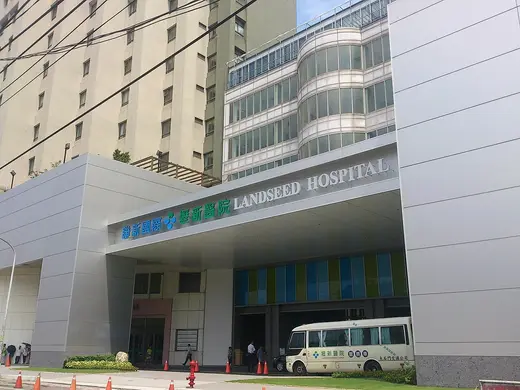
Prefer to book it yourself? Call Landseed International Hospital on 03-494-1234 or use its website ↗. It's free; most hospitals take bookings in Chinese.
We book it with the hospital for you, from US$149, paid only after the hospital confirms. We reply by email with available dates, the confirmed price, and whether an English report is available.
Paying from a US account? HSA and FSA notes.
A premium-tier program with Abdomen and pelvis CT, Colonoscopy, Gastroscopy (upper GI endoscopy), Breast ultrasound and Pelvic (gynecologic) ultrasound and a 67-test panel.
What stands out
Abdominal organs, tumors, stones.
Colon polyps and colorectal cancer; polyps can usually be removed during the same exam.
Stomach and esophagus ulcers, inflammation and cancer.
Breast lumps; complements mammography, especially in dense breasts.
Every test, in English
67 tests listed, 60 of them on our shared test list, so they line up against other hospitals' packages.
Show all 67 tests and what each screens for
| Test | Screens for |
|---|---|
| Vitals | |
| Blood pressure | Screens for hypertension, a major risk factor for heart disease and stroke. |
| Height, weight and BMI | Basic body measurements used to assess weight-related health risk. |
| Basic vital signs (pulse, temperature, respiration) | Basic pulse, temperature and breathing rate measurements taken during a checkup. |
| Waist circumference | Central obesity, a marker of metabolic risk. |
| Blood Count | |
| Complete blood count | Anemia, infection and blood cell disorders. |
| Vitamin B12 and folate | Deficiencies that cause anemia and nerve problems. |
| White blood cell differential | Breakdown of white cell types; infection, allergy and some blood cancers. |
| Liver Function | |
| Albumin | Liver function and nutrition status. |
| ALT (SGPT) | Liver cell damage; the most common liver screening test. |
| AST (SGOT) | Liver cell damage. |
| Direct bilirubin | Bile duct obstruction. |
| Gamma-GT | Bile duct and alcohol-related liver stress. |
| Globulin and A/G ratio | Immune protein levels. |
| Lipase | Pancreatic enzyme; more specific than amylase for pancreatitis. |
| Total bilirubin | Jaundice, liver and bile problems. |
| Total protein | Nutrition and liver/kidney protein handling. |
| Kidney & Electrolytes | |
| Blood urea nitrogen | Kidney function. |
| Calcium | Bone, parathyroid and kidney conditions. |
| Creatinine | Kidney function. |
| Estimated GFR | Kidney filtering capacity; stages chronic kidney disease. |
| Electrolytes (Na, K, Cl) | Salt and fluid balance; kidney and hormone problems. |
| Phosphorus | Kidney and bone metabolism. |
| Uric acid | Gout risk and kidney stone risk. |
| Lipids & Cardiometabolic | |
| HDL cholesterol | Protective cholesterol level. |
| LDL cholesterol | The main cholesterol driving heart disease risk. |
| Total cholesterol | Cardiovascular risk. |
| Triglycerides | Cardiovascular and pancreatitis risk. |
| Glucose | |
| Fasting glucose | Diabetes and prediabetes. |
| Hemoglobin A1c | Average blood sugar over the past three months; diabetes. |
| Fasting insulin | Insulin resistance. |
| Thyroid & Endocrine | |
| Free T4 | Thyroid hormone level. |
| T3 | Thyroid hormone level. |
| TSH | Thyroid function; the primary thyroid screening test. |
| Vitamin D (25-OH) | Vitamin D deficiency; bone health. |
| Tumor Markers | |
| AFP | Liver cancer marker (also used with liver ultrasound in hepatitis B carriers). |
| CA-125 | Ovarian cancer marker. |
| CA 15-3 | Breast cancer marker. |
| CA 19-9 | Pancreatic and biliary cancer marker. |
| CA 72-4 | Gastric cancer marker. |
| CEA | Colorectal and other GI cancer marker. |
| CYFRA 21-1 | Lung cancer marker. |
| ProGRP | Small cell lung cancer marker. |
| PSA | Prostate cancer marker. |
| SCC antigen | Squamous cell cancer marker (cervix, lung, head and neck). |
| Infection Serology | |
| Hepatitis B surface antibody | Immunity to hepatitis B (from vaccine or past infection). |
| Hepatitis C antibody | Hepatitis C infection. |
| Hepatitis B surface antigen | Current hepatitis B infection; very common in Taiwan. |
| Urine & Stool | |
| Urinalysis | Kidney disease, urinary infection, diabetes. |
| Cardiac | |
| Resting ECG | Heart rhythm and signs of prior heart damage. |
| X-ray | |
| Chest X-ray | Lung, heart size and chest abnormalities. |
| Ultrasound | |
| Breast ultrasound | Breast lumps; complements mammography, especially in dense breasts. |
| Pelvic (gynecologic) ultrasound | Uterus and ovary abnormalities (fibroids, cysts). |
| Prostate ultrasound | Prostate size and abnormalities. |
| CT Imaging | |
| Abdomen and pelvis CT | Abdominal organs, tumors, stones. |
| Endoscopy | |
| Colonoscopy | Colon polyps and colorectal cancer; polyps can usually be removed during the same exam. |
| Gastroscopy (upper GI endoscopy) | Stomach and esophagus ulcers, inflammation and cancer. |
| Bone & Body Composition | |
| Bone density (DXA) | Osteoporosis and fracture risk. |
| Eye | |
| Color vision | Color vision deficiency. |
| Intraocular pressure | Glaucoma. |
| Visual acuity | Vision sharpness. |
Before you book
2.0 km from Laojie River station
On the OCAC i僑卡 partner list. Card holders can ask the center about a discount.
17 packages listed
About this hospitalWhat the center says
From the center's own pages, in English. Each statement links to its source.
The VIP health club's weekday service hours are 08:00 to 17:00.
The VIP health club is also open Saturdays from 08:00 to 12:00, excluding national holidays.
The Health Check Center's service hours are Monday to Saturday, 8:00 to 11:00.
The VIP checkup packages include one Chinese-language report.
VIP checkup results can be looked up online through a borderless report portal.
VIP checkup packages include a summary and explanation of the report.
Add to this package
Tests this center prices separately that this package does not include.
| Test | Price | Note |
|---|---|---|
| Sleep apnea screeningas listed: Sleep apnea test (EOG, EMG, ECG, EEG, arterial oxygen saturation, snore intensity, nasal airflow) | US$249 NT$8,000 | |
| Low-dose chest CTas listed: Lung cancer checkup - low-dose chest CT | US$140 NT$4,500 | |
| Brain MR angiographyas listed: Cerebral MR angiography | US$109 NT$3,500 | |
| Brain MRI | US$249 NT$8,000 | |
| Breast MRIas listed: Breast MRI (with contrast) | US$467 NT$15,000 | For women |
| Head and neck MRIas listed: Head and neck MRI (with contrast) | US$545 NT$17,500 | |
| Whole spine MRIas listed: Whole-spine MRI (cervical, thoracic, lumbar) | US$545 NT$17,500 | |
| PET-CT (FDG)as listed: Whole-body PET scan | US$1,246 NT$40,000 | |
| Environmental toxin / hormone disruptor panelas listed: Environmental hormone (endocrine disruptor) panel | US$168 NT$5,400 | |
| Antioxidant and vitamin panelas listed: Antioxidant nutrient analysis | US$187 NT$6,000 | |
| Gut microbiome analysisas listed: Gut microbiome test | US$311 NT$9,999 |
Source ↗ · checked 2026-09-20
Bought one by one at US cash-pay marketplaces, the tests we could price list at about US$7,160–9,766 for a woman (54 of 58 tests) and US$7,174–9,790 for a man (52 of 56 tests) (MDsave, Quest and others; checked 2026-10-11).
How we priced it
A panel counts once however many of its tests the package lists. A test for one sex only is counted only for that sex. Tests we could not price are left out, so this is not what a US checkup would cost. Prices marked "rough" come from a single reseller or are extrapolated from a similar test.
- AFP: US$50, shayahealth.com (reseller), rough
- Hepatitis C antibody: US$62, Quest direct hepatitis C with confirmation
- Bone density (DXA): US$150–250, CoveredUSA; primary-md.com
- Breast ultrasound (women only): US$331, MDsave Ultrasound Breast Bilateral
- CA-125 (women only): US$34, shayahealth.com (reseller), rough
- CA 15-3 (women only): US$59, Walk-In Lab (reseller), rough
- CA 19-9: US$43, shayahealth.com (reseller), rough
- Complete blood count and 1 related test, priced as one panel: US$29, Quest direct
- CEA: US$28, shayahealth.com (reseller), rough
- Chest X-ray: US$100–150, careroute.ai; khealth.com
- Colonoscopy: US$2,200–3,300, MDsave
- Creatinine and 11 related tests, priced as one panel: US$49, Quest direct comprehensive metabolic panel
- Abdomen and pelvis CT: US$618, MDsave CT Abdomen and Pelvis without/with contrast
- Direct bilirubin: US$29–39, Walk-In Lab direct bilirubin $29; total + direct $39 (plus $6 physician fee); not sold standalone by Quest or Labcorp, rough
- Free T4 and 1 related test, priced as one panel: US$89, Labcorp OnDemand TSH + free T4 panel $89 list (checked 2026-10-11); Walk-In Lab free T3 + free T4 panel $69 (reseller, not re-checked)
- Gastroscopy (upper GI endoscopy): US$2,000–3,000, MDsave
- Gamma-GT: US$29–59, Labcorp OnDemand GGT $59; Walk-In Lab $29 (reseller, plus $6 physician fee)
- Hemoglobin A1c: US$39, Quest direct
- Hepatitis B surface antigen and 1 related test, priced as one panel: US$99, Quest direct hepatitis B with confirmation
- Fasting insulin: US$34–99, Walk-In Lab fasting insulin $34; Quest Insulin Resistance Test Panel (insulin + C-peptide) $99, rough
- Lipase: US$35–39, Labcorp OnDemand $39; Walk-In Lab $35 reseller
- Pelvic (gynecologic) ultrasound (women only): US$220, MDsave Ultrasound (one body area, pelvic complete listed)
- Phosphorus: US$34, Walk-In Lab phosphorus serum $34, rough
- Physician physical examination and 4 related tests, priced as one panel: US$250–400, CVS ($99-150); CoveredUSA median ~$250; Sidecar ($353-502)
- Prostate ultrasound (men only): US$606, Turquoise Health transrectal ultrasound average cash price (via search snippet); general range, rough
- PSA (men only): US$52–62, Quest direct-to-consumer
- Resting ECG: US$102, CarePriceGuide national average
- Total cholesterol and 3 related tests, priced as one panel: US$59, Quest direct lipid panel
- TSH: US$49, Quest direct
- Uric acid: US$42–49, Quest $42 (gout uric acid test); Labcorp OnDemand $49; Walk-In Lab $29 reseller
- Urinalysis: US$40–49, Quest $40; Labcorp OnDemand $49; Walk-In Lab $29 reseller
- General eye exam and 3 related tests, priced as one panel: US$100–150, Warby Parker ($85); America's Best ($80); CoveredUSA median ~$150; VisionTestCost 1280-store median $95
- Vitamin B12 and folate: US$82–89, Quest $82; Labcorp OnDemand $89; Walk-In Lab $59 reseller
- Vitamin D (25-OH): US$75–99, Quest $75; Labcorp OnDemand $99; Walk-In Lab $59 reseller
Radiation from this package's imaging
About 7.8 mSv from the tests we could identify, a typical adult dose for these exams: roughly 2.6 years of natural background radiation (about 3 mSv a year, US average).
This package also lists 7 items we have not matched to a test; if any of them is an X-ray, CT or PET scan, the total is higher.
- Bone density (DXA) · about less than 0.01 mSv
- Chest X-ray · about 0.1 mSv
- Abdomen and pelvis CT · about 7.7 mSv
Typical doses from published references (RadiologyInfo.org ↗, Mettler et al. 2008 ↗); the actual dose depends on the scanner and protocol. Ask the center for its own figure.
What US screening guidelines say
The US Preventive Services Task Force is an independent US panel whose recommendations cover people without symptoms. Shown for comparison; it is not advice for you.
What US screening guidelines say about 22 of these tests
General preparation notes for 12 tests in this package
This is general information about how the exam is usually done, not medical advice for you or your family member. Requirements vary by center and by individual health history — always follow the center's own instructions and your own doctor's guidance, especially for any medicine change.
Fasting for 9 to 12 hours (no food or drink except plain water) is often requested, so the test is often done in the morning.
Mention when booking: Confirm with the center whether your test needs fasting; if you take insulin or other diabetes medicine, ask the prescribing doctor how to manage it while fasting.
Fasting for 9 to 12 hours (no food or drink except plain water) is often requested.
Mention when booking: Confirm with the center whether your test needs fasting; if you take insulin or other diabetes medicine, ask the prescribing doctor how to manage it while fasting.
Usually needs at least 8 hours without food or drink except water beforehand.
Mention when booking: If you take insulin or other diabetes medicine, ask the prescribing doctor how to manage it while fasting, and mention it to the center.
Usually needs 8 to 12 hours of fasting (no food or drink except plain water) beforehand.
Mention when booking: Mention biotin (vitamin B7) supplements, usually paused for at least a day before this test, and any diabetes medicine; ask the prescribing doctor before changing any medicine.
Usually needs a clean-catch (midstream) sample; some tests instead ask you to collect all urine passed over 24 hours.
Mention when booking: Ask which specific urine test your provider ordered, since collection instructions vary by test.
Usually needs no fasting; you remove jewelry, metal objects and sometimes clothing above the waist for a hospital gown.
Mention when booking: Tell the center if you are, or might be, pregnant.
For a transabdominal scan, drinking water beforehand to fill the bladder is common; for a transvaginal scan, an empty bladder is usual instead.
Mention when booking: Tell the center which type of scan you expect, and mention if you are, or might be, pregnant.
Usually needs little or no preparation; an enema and antibiotics are mainly for a planned biopsy. A scan through the lower belly instead may need a full bladder.
Mention when booking: Mention aspirin or other blood thinners; if a biopsy is planned, the center may ask about pausing them, so ask the prescribing doctor before changing any medicine.
Usually needs a few hours without food or drink beforehand; you may be asked to drink an oral contrast liquid, and an IV contrast injection is common.
Mention when booking: Tell the center about kidney disease, contrast allergy, diabetes medicine and possible pregnancy; ask the prescribing doctor before changing any medicine.
Usually needs a clear-liquid diet the day before and a split-dose bowel-cleansing prep taken the evening before and morning of the exam; drinking extra fluids helps avoid dehydration.
Mention when booking: Tell the center about heart, kidney or lung disease, blood thinners, diabetes medicine, aspirin, arthritis medicine or iron; ask the prescribing doctor before changing any medicine.
Afterwards: After sedation, no driving, operating machinery or signing legal documents for the rest of the day; someone should take you home.
Usually needs about 8 hours without food or drink, including water, beforehand.
Mention when booking: Tell the center about heart or lung disease, aspirin, blood thinners, arthritis medicine, insulin or iron, and ask the prescribing doctor before changing any medicine.
Afterwards: After sedation, no driving, machinery or legal documents that day; get a ride home. Contact a doctor for fever, trouble swallowing, chest or belly pain, or black stools; bleeding can start days later.
Usually asks that you skip calcium supplements for 24 hours beforehand. Avoid clothing with metal zippers or buttons, and remove jewelry.
Mention when booking: Mention any recent barium exam or CT/nuclear-medicine contrast, and whether pregnancy is possible.
How we collect and check these prices: see who we are and where the data comes from.
If this isn't quite right
Other packages at Landseed International Hospital
| Package | Tests | Price |
|---|---|---|
| LOHAS Afternoon Checkup - Classic | 20 | US$109 NT$3,500 |
| National Civil Servant Checkup 4500 - A. Comprehensive PackageCivil-servant | 44 | US$140 NT$4,500 |
| National Civil Servant Checkup 4500 - B. Peptic Ulcer PackageCivil-servant | 42 | US$140 NT$4,500 |
| National Civil Servant Checkup 4500 - C. Chest CT PackageCivil-servant | 23 | US$140 NT$4,500 |
| Classic Vitality Health Checkup | 47 | US$156 NT$5,000 |
| LOHAS Afternoon Checkup - Deluxe | 25 | US$156 NT$5,000 |
| Cardiovascular Function Checkup | 44 | US$249 NT$8,000 |
| Lung CT Checkup | 48 | US$312 NT$10,000 |
| Painless GI Endoscopy Checkup (companion required) | 27 | US$430 NT$13,800 |
| Comprehensive Painless GI Endoscopy Checkup (companion required) | 52 | US$576 NT$18,500 |
All packages at Landseed International Hospital Health Management Center →
Similar packages in Taoyuan
| Package | Hospital | Tests | Price |
|---|---|---|---|
| Active Luxury Guardian Type Checkup | Taoyuan Chang Gung Memorial Hospital Health Examination Center | 48 | US$919 NT$29,500 Women US$981 |
| Elite C - Heart/Lung Checkup | Taoyuan General Hospital, Ministry of Health and Welfare | 20 | US$592 NT$19,000 |
US$ at 32.1 TWD, 23 Sep 2026; you pay in NT$.
Browse: Cancer screening · Men's health · Women's health · All checkups in Taoyuan · What a checkup costs in Taiwan